Am I Postnatal? Postnatal Care, Yoga & Massage in Northumberland for Every Stage of Motherhood
Am I Postnatal?
I think there are a lot of different ways people use the word postnatal and so I wanted to dedicate a blog post today to how I define postnatal and why…
Postnatal is for life. Not just for the 4th trimester or the first year. Once you have carried a baby, even if you experience loss, you are postnatal to me.
You have transformed from maiden to mother.
We all have different lived experiences of how it feels once our baby is no longer in our tummy. Some of us will be grieving, some of us will have experienced huge trauma, some of us will feel elated, powerful, a few of us will feel immediate love.
From the moment you conceived your baby your body starts to change. Hormones change rapidly, especially in the first 12 weeks. Your body is busy growing a whole new organ (the placenta) as well as sustaining the life of your baby. You will also shift from a state of maiden (just looking after yourself) to mother, knowing that you are now caring for yourself and a little life too. I felt this in two very different ways.
In my first pregnancy I was aware of my body from a training point of view. I knew how to stand to lift a weight, I knew the taught technique for squatting. I could make my body “look like” it should when moving. Then I fell pregnant and all of the changes were completely out of my control. Although I knew how to manage my external body in place, I was very disconnected from the internal shifts and changes.
Everything felt really scary in my first pregnancy. The sickness felt overbearing. I also had a lot of bleeding in the first 12 weeks and because of that I genuinely did not think that I was going to be able to grow a whole baby. It was tough. I feared losing him from conception through to birth. And I spent the whole pregnancy actively disengaging from “loving” my baby because what if I fell in love with the baby and then lost it? It was much easier to just be practical… I know many of you will have lived through a pregnancy in this way. Especially after a previous loss because it brings self-preservation. It brings the ability to keep going…
With Beatrice I knew four days after we conceived her that I was pregnant. I know the exact occasion that we made her. I also knew that I wanted to connect to her deeply. I lay on the floor with my hands on my tummy and the colour yellow flooded my vision. My light. My guide. My connection to her was instant.
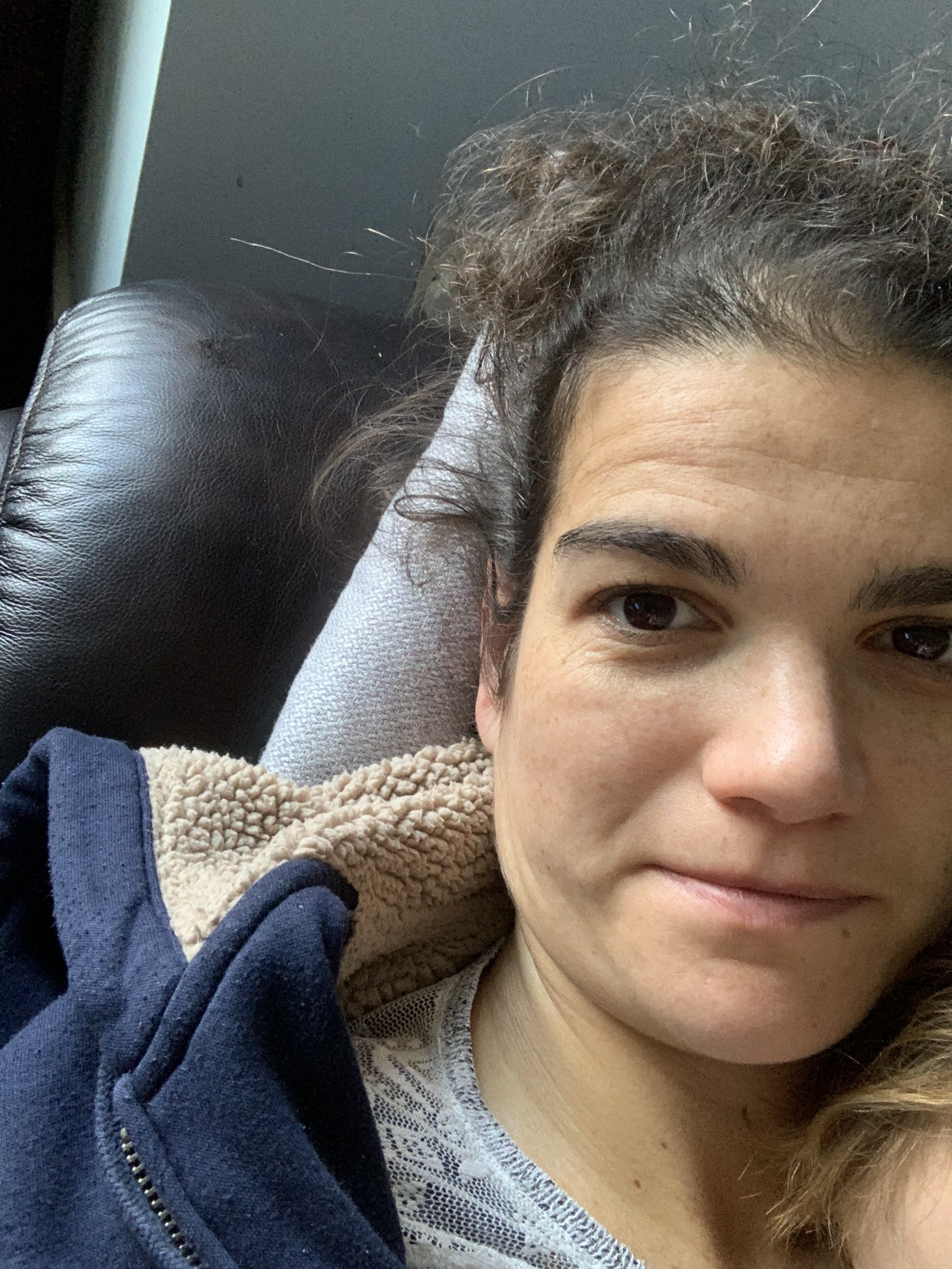
How did you feel when you first conceived your baby/ies? Scared, sick, tired, grief for your maiden life? Joy, excitement, anticipation, shock.
All so valid.
And not often talked about.
There seems to be this idea that all pregnant women are so connected to and in love with the baby they carry. Women don’t often talk about how they actually feel about their pregnancy.
Pregnancy Yoga and Pregnancy Massage in Northumberland – Supporting You, Not Just the Baby
We talk about topics like breastfeeding.
The best breastfeeding tops?
Which pram to buy if you like dog walking on the beach?
What pain relief can I have during labour?
What is the best breathing technique for birth?
How to birth your placenta?
How do you feel about your pregnancy?
We don’t ask that so much. We put the focus on the baby. Not on you. But you are growing the human. How you feel matters. If you feel helpless, lost, sad, scared, it matters.
And so in pregnancy we are not just growing and carrying a baby, managing all of the physical changes that it brings. We are also carrying the things we feel we shouldn’t say. In case we seem ungrateful or even worse, a bad mother already.
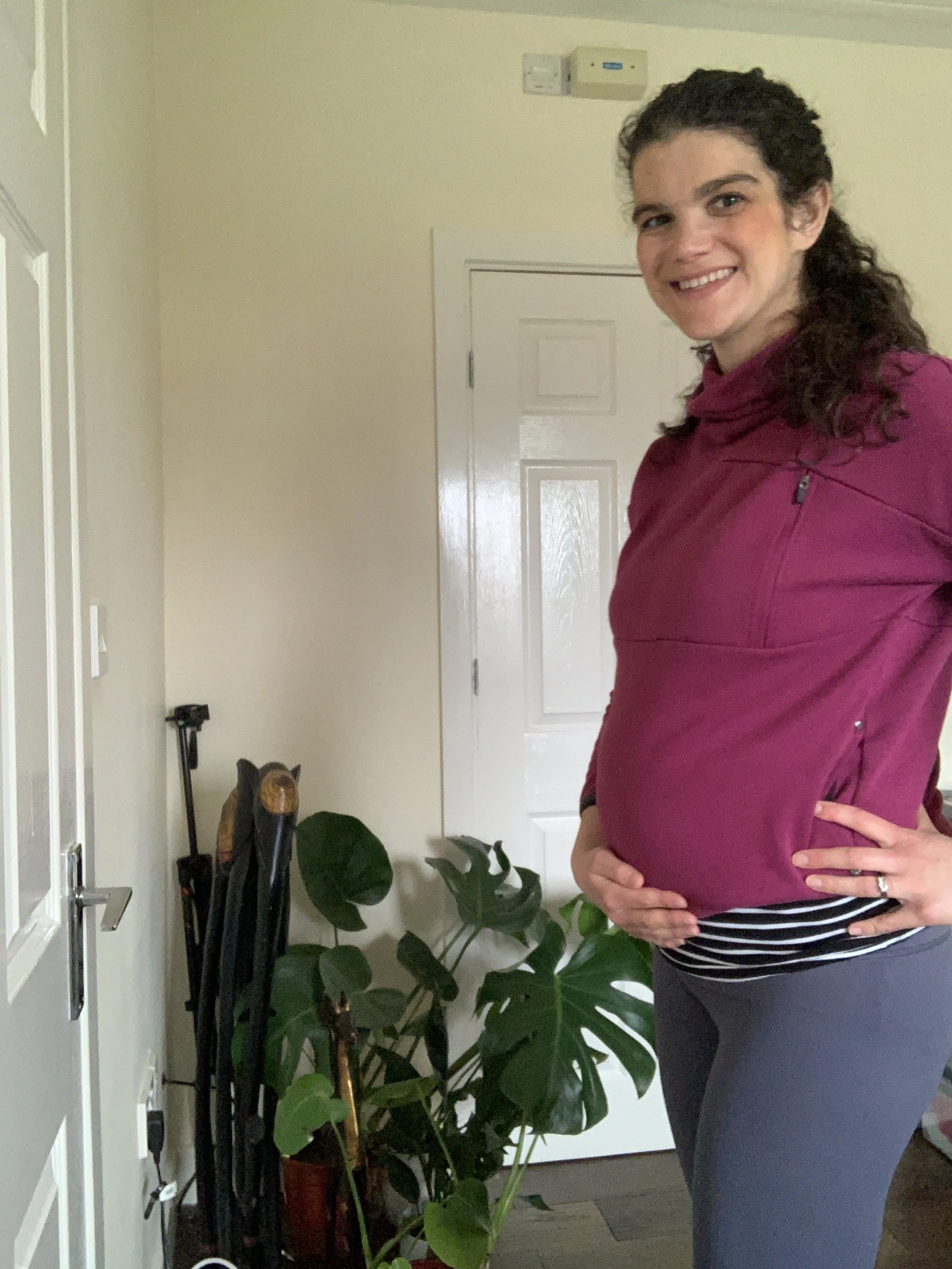
20 weeks pregnant with Beatrice - About to record an online pregnancy yoga class
Postnatal Yoga and Postnatal Massage in Northumberland – Care Beyond the Fourth Trimester
This is why postnatal care is so important. You need time to process that huge transition. To process everything you experienced during your pregnancy. The birth or loss of your baby is, in a way, a release, a letting go. And it can be a catalyst to let everything else go too.
You might start to speak your mind more. You might decide that you are no longer doing certain things.
(I no longer drink alcohol.) Not for my babies but because I have realised how awful it makes me feel and how much even one small glass of wine really impacts how I feel about life the following day.
I also don’t do household chores religiously anymore in a set routine. They occasionally happen when they have to. And I don’t feel guilty about it. I no longer have a desire to appear to be “the good wife and housekeeper”.
I am deeply invested in being a good mother. And that, to me, is being present, understanding my nervous system and regulating it continuously so that I can help my children to understand and regulate their own. And most of all, being with them. Playing, talking, going outdoors, just sitting with them. Especially in these early years.
That other stuff that used to really matter, like how clean my house was and how beautiful the meals look, it just isn’t important now.
Once you carry a baby you are no longer the same…
Pelvic Floor Healing and Health After Birth in Northumberland
My husband said that to me this Christmas, “you are not the person you used to be before we had children.”
My response…
“No, of course I’m not. But I really love that. I am genuinely the happiest I have ever been.”
But that isn’t just luck that I love being a mum. I had to really work to process it all. To process the huge grief I experienced after becoming a mother and then losing my job in COVID. (My job literally was my life. It defined me.) I had to sit with that.
I had to process all of the pieces of me that I didn’t like. All my responses to William’s needs that didn’t come from a place of love. I got curious about them. Why am I finding this hard? And often an answer would come quickly, usually relating back to perceptions of the way I was brought up.
I worked really hard to understand my new body and cure my pelvic floor pain after birth. I learnt about adapted ways to safely squat after birth. I learnt how to manage pressure in my body to avoid heaviness in my vagina when walking with a sling.
I also learnt that I needed holding as much as my babies did.
I started to create rituals and routines that felt like giving myself a hug. I started to journal the things I was grateful for each day. This slowly shifted my mindset from panic and scarcity to abundance.
For example, I used to really worry about money (especially when I lost my job six months into mat leave). I also stressed about sleep, or rather the lack of it. But with a gratitude practice I shifted to focus on the deeper connection I gained to myself, the beauty I was able to see in nature (on 5am beach walks to make the baby sleep). It was really powerful stuff.
And breathwork. This magic still holds its power for me. My children follow me too. Breathwork helped to support my postnatal posture and, in the longer term, relieve my pelvic floor dysfunction. It also helps to bring calm. To send my children off to sleep. To support me in the meltdowns (from my children, or me!).
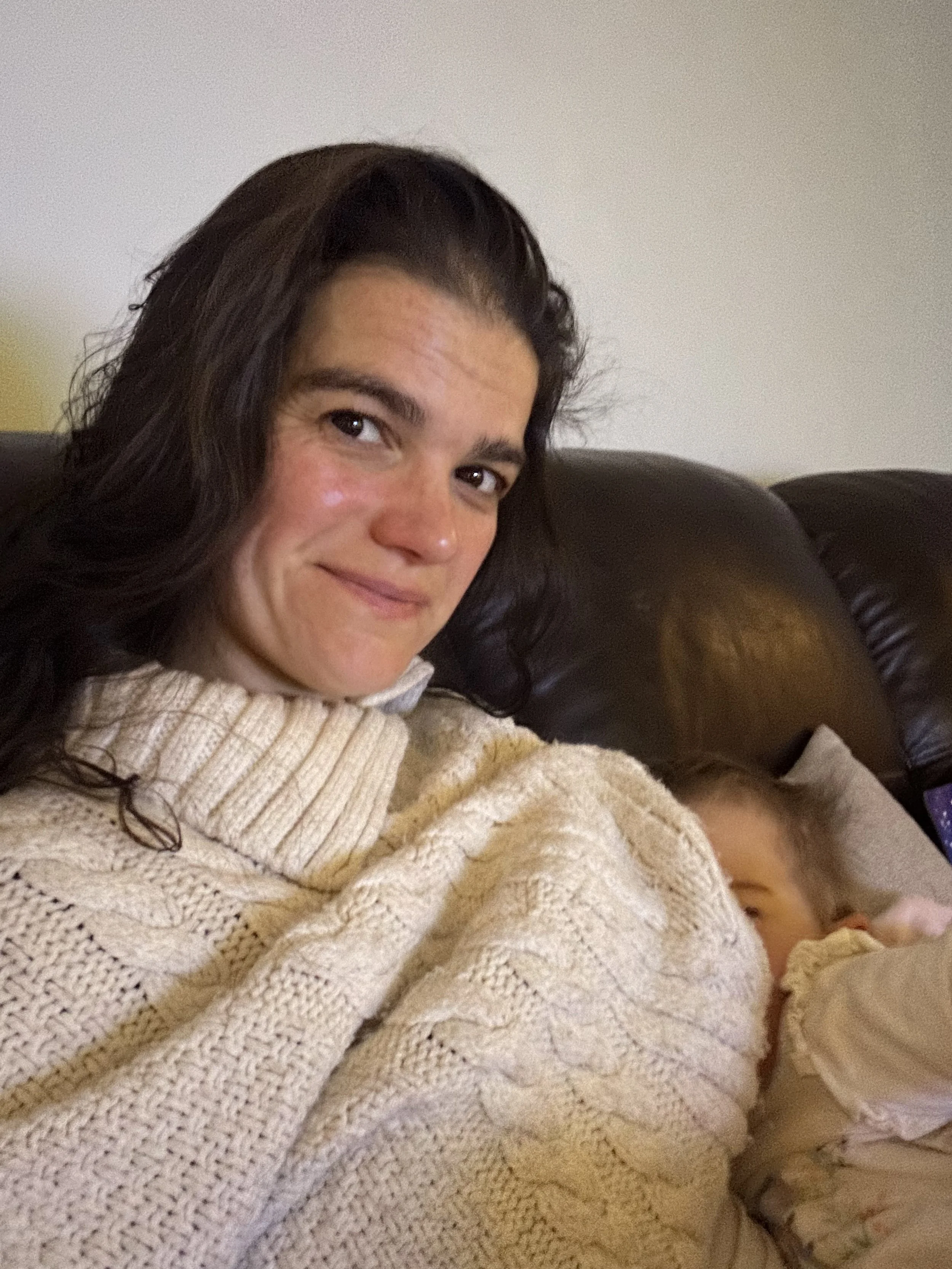
Postnatal Care in Northumberland – You Are Still Held
And some of you may have found your way using these techniques to hold you in your pregnancies and after birth. Many of you, though, will not. You’ll be lost in how on earth you take care of your own wellbeing at the same time as raising a baby who didn’t come with an instruction manual and doesn’t do any of the things you are reading about on Instagram.
The only thing you might be doing for yourself is having a walk or a shower.
I know that is not enough… and so do you.
So when I say postnatal care, I mean you. You with the newborn. You in the first 12 months. But I also mean you with the 7-year-old, the 10-year-old too. The one who has been carrying all of these feelings and emotions about motherhood that you rarely, if ever, actually share because you don’t want others to think you are not coping or label you as a bad mum. I mean you.
The spaces I hold to explore your feelings, the knowledge I share to reconnect you with your body that no longer feels like yours, the massages I provide to heal, release tension, trauma, and to allow your brain just a moment of peace – they are for you.
You are always postnatal after a pregnancy.
You deserve to be seen for the woman you are. Not just the mother you have become.
But the very essence of you needs nourishing. It needs a safe space, a voice that listens, not gives advice. An ear that is kind. A hand that holds you in the same careful way that you held your newborn.
That is what my postnatal care brings, and it’s for every mother, no matter which stage you are at. Trying to conceive after loss. Holding a newborn. With children at the end of primary school.
You are the reason for my work.
It is so needed in this world.